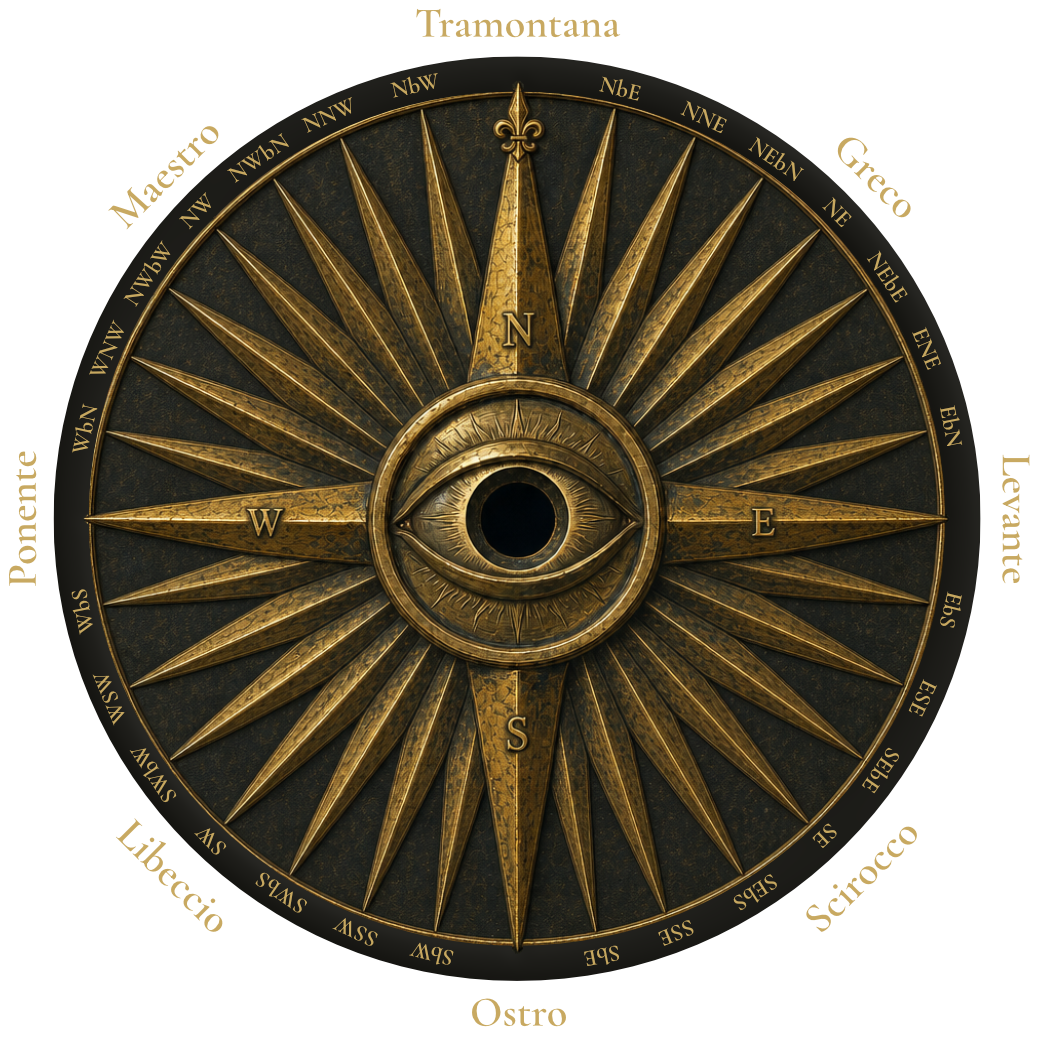
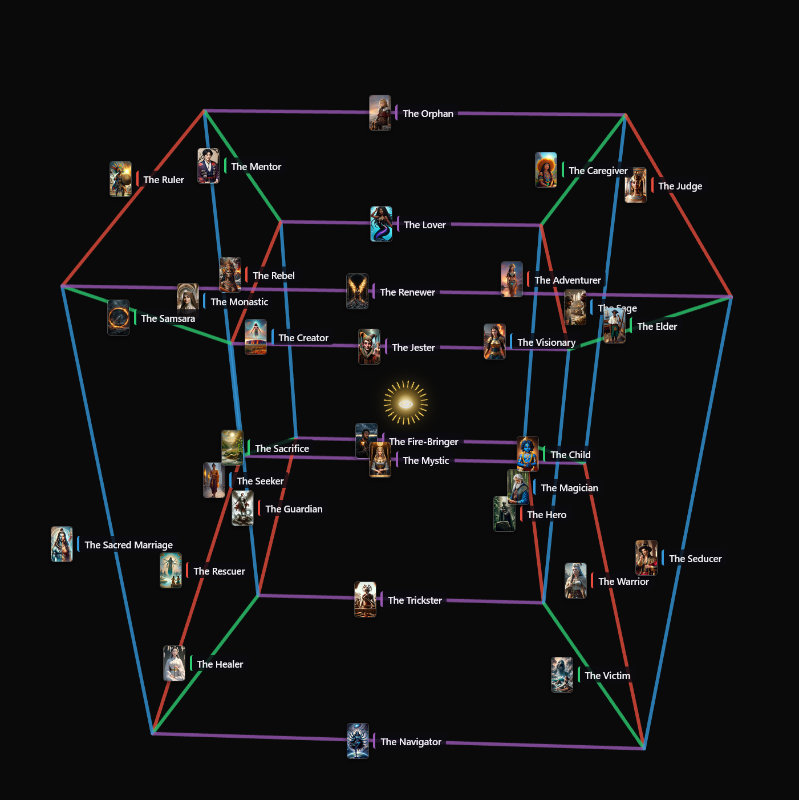
Thirty-two named winds blow around a single still point, and the point is
the thirty-third: the one who sees the compass rose and feels the wind. This is a working
instrument for orientation, a higher-order geometry of thirty-two bearings
plus the witness who takes them. It does not tell you who you are.
It shows you where you stand and lets you move.
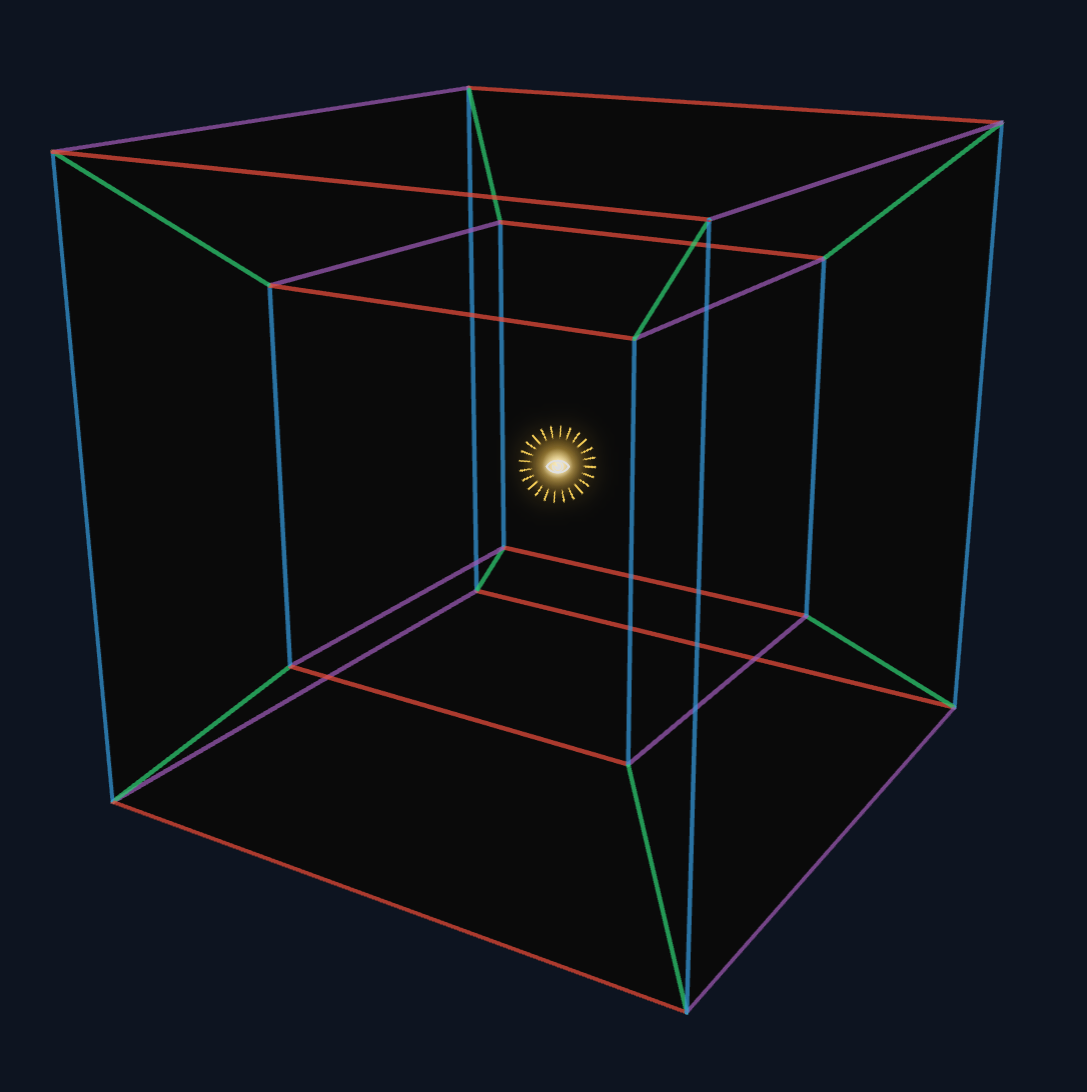
Beneath every lens on this site sits a single exact frame: the tesseract.
Its structure is not symbolism and not opinion; it is geometry, and
geometry is forced. You could derive it again yourself, from first
principles, and arrive at precisely the same figure.
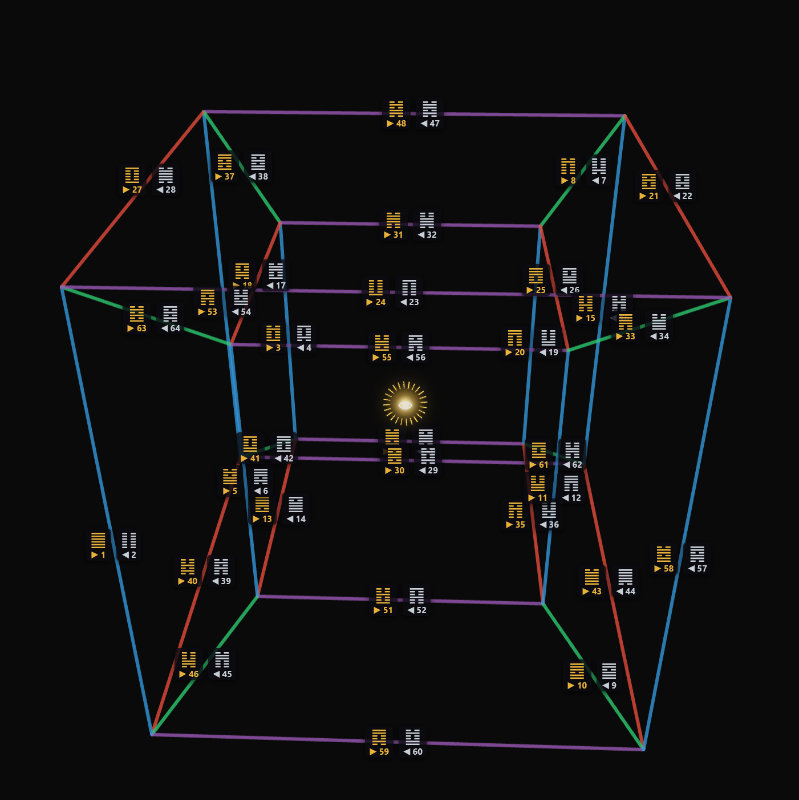
What rests upon that frame is another matter. Six great systems of
orientation: an oracle three thousand years old, a modern typology, a deck
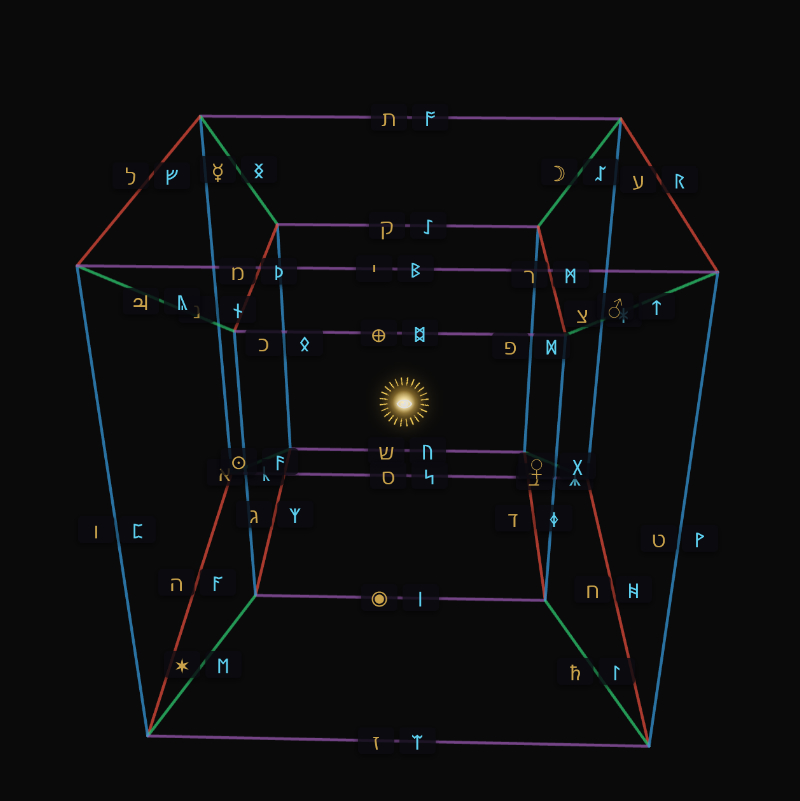
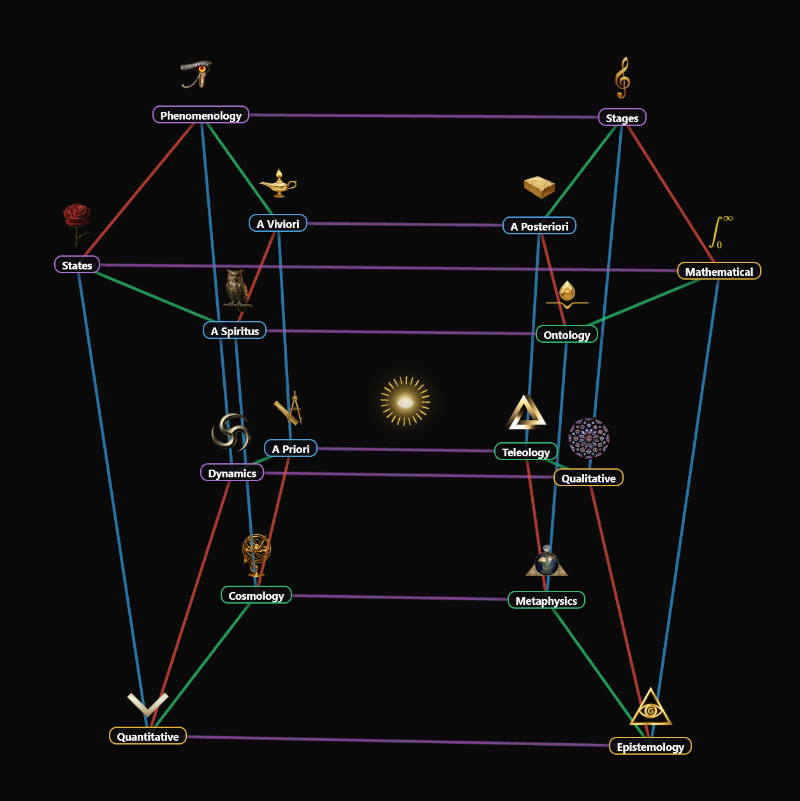
of archetypes, and a cycle of alchemical transformation, uncanny symmetries between the tree of life in Kabbalah and the standard model of physics, and the author's 4D philosophical map, each find a natural seat on
the same figure, as though the geometry had been quietly waiting for them.
The book claims the grammar; the instrument lets you explore the
correspondences with your own hands.
One four-dimensional geometry beneath every map, shown here as a three-dimensional shadow
The Maps
Six maps from one universal geometry
The geometry comes first. Each of these practical maps is a declared convention or lens
laid over the same geometric frame, not to be confused with the intelligible frame itself.
Read a structural walkthrough of the Thirty-Two Winds cartography; what is forced by
geometry, what is an empirical observation, and what is an interpretive construction.
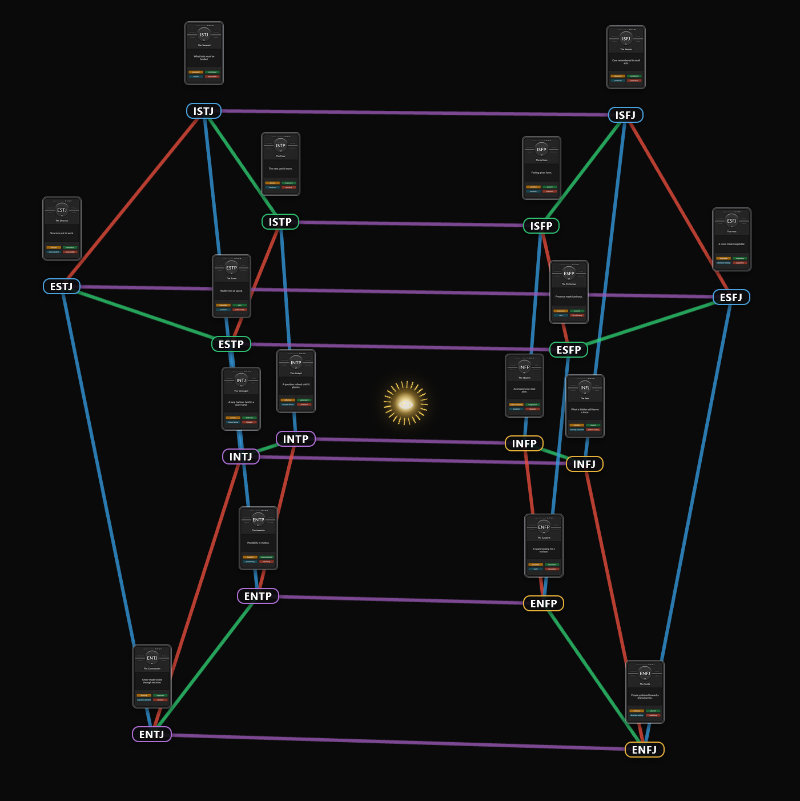
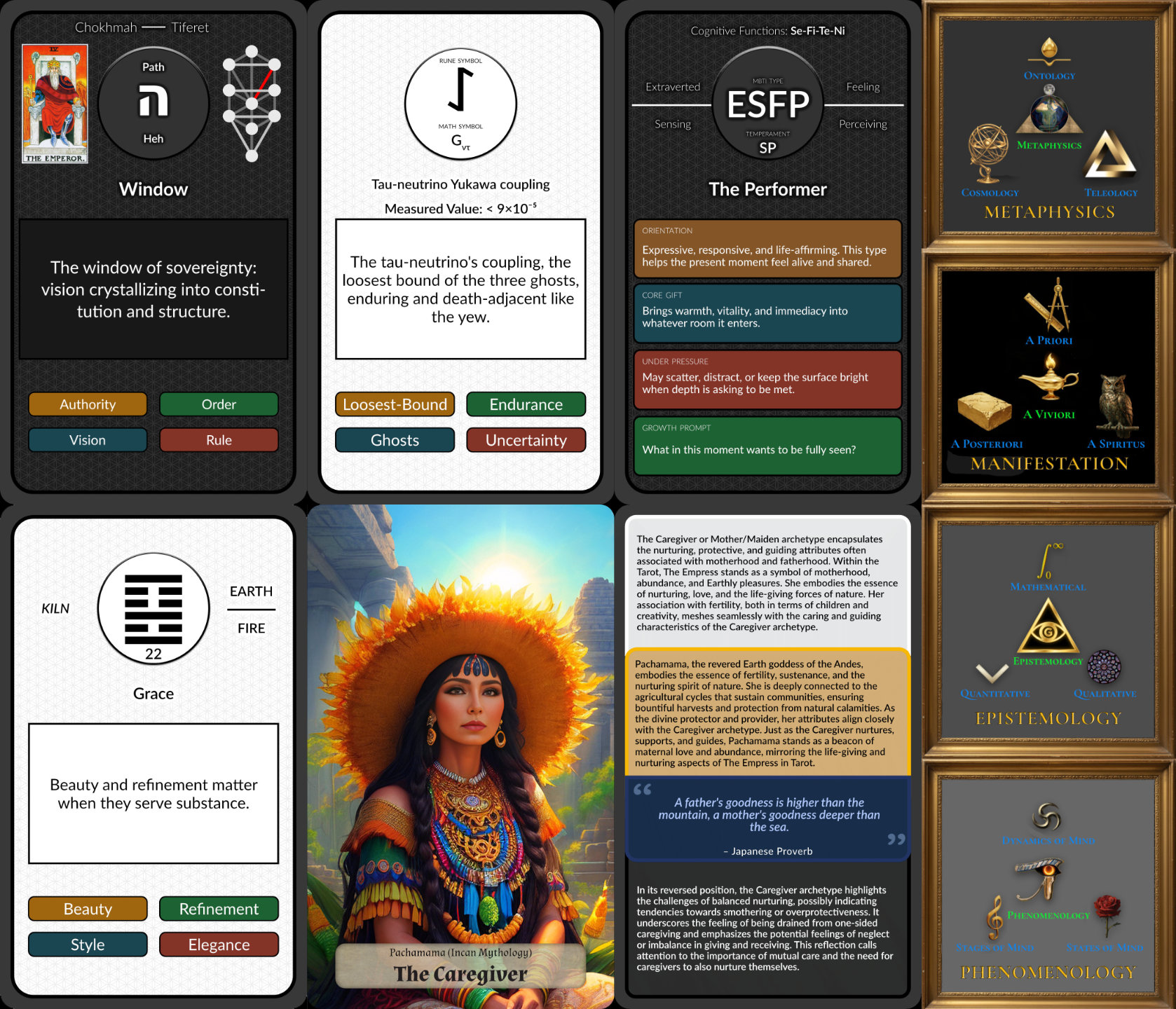
Every vertex and edge of the tesseract corresponds to multiple maps, and each map has its own deck—many with distinct front and back faces. Together, these cards form a layered system of reference embedded within the instrument. Some may eventually become satisfying physical decks: objects that can be held, handled, and explored through the hands as well as the mind.
Card Sampler: The cards contain valuable information and make the systems practical
The Octahedral Cross-Section
Six winds of change
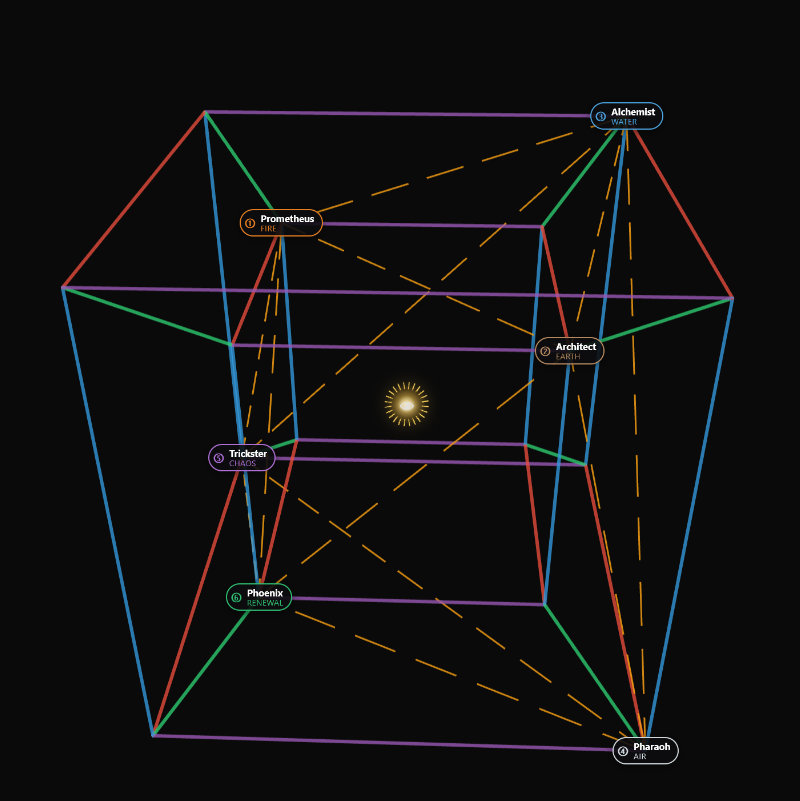
Slice the tesseract through its heart, square to its long diagonal, and the
cross-section is a regular octahedron: six vertices, in the same way the cube’s central slice perpendicular to a body diagonal gives a regular hexagon in 2D. That is the compass
speaking; the geometry forces it. What those six vertices mean is the lyre's
share: they carry the six phases of the dialectical cycle named in
The Alchemical Imperative, not a line and not a circle but a spiral,
in which each phase contains the seeds of its successor.
I
Prometheus
Revolutionary Thesis
The fire-bringer who steals from the gods and dares the consequences: divine audacity, vision before structure.
II
Architect
Pragmatic Antithesis
The master builder who houses the fire in structures worthy of it, vision made durable beyond its maker.
III
Alchemist
Organizational Synthesis
The marriage of opposites, innovation and stability held in one hand without being torn apart. Philosophical gold.
IV
Pharaoh
Bureaucratic Thesis
The ruler trapped in monuments of their own making, the worship of process over purpose, gold gone back to lead.
V
Trickster
Disruptive Antithesis
The boundary-crosser who reveals the emperor has no clothes, chaos in the service of evolution, never for its own sake.
VI
Phoenix
Revolutionary Synthesis
Rises from its own ashes, transformed but continuous with its essence, renewal that incorporates rather than replaces. And the spiral turns.
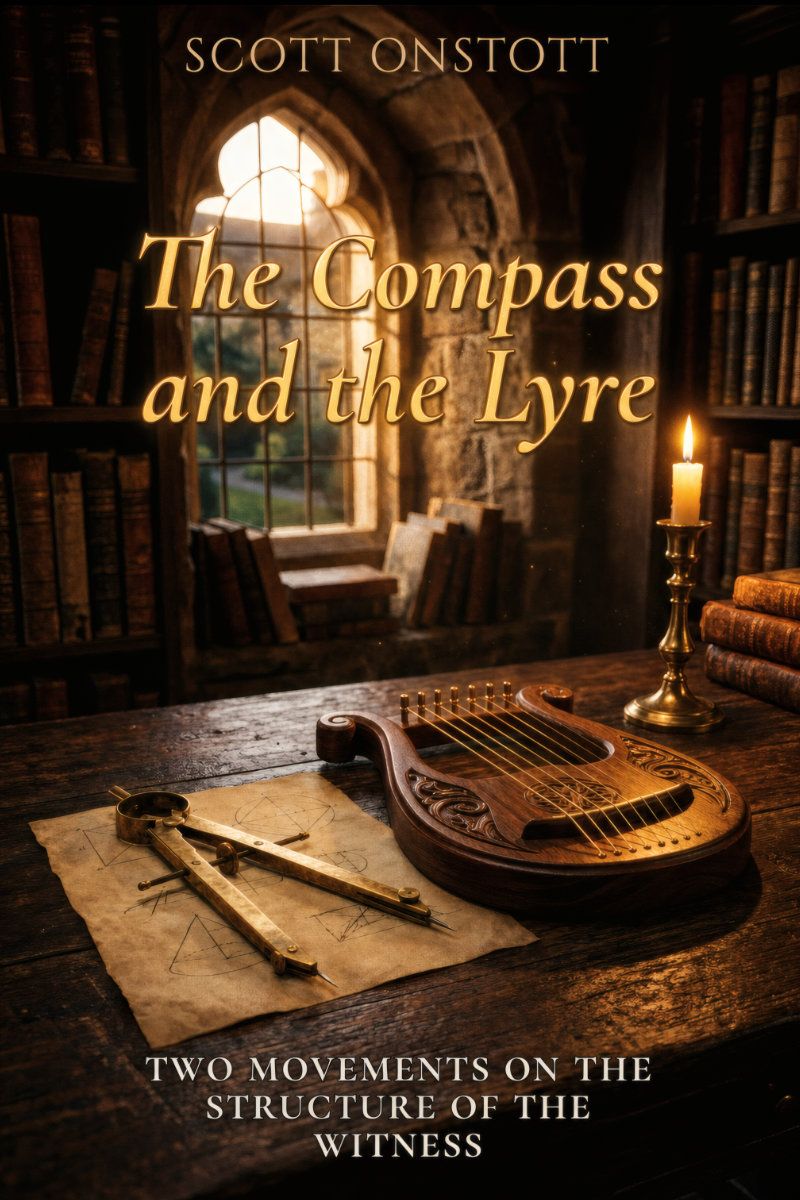
The book beneath this instrument speaks in two voices on purpose. The first
movement, The Thirty-Third Position, comes through the compass: formal,
geometric, precise, an exact structure, thirty-two edges around one
unrepresented center, held rigorously apart from every interpretation laid
upon it. The second movement, The Bridge-Being, comes through the lyre:
dramatic, voiced, immediate, a dinner-table argument between two people who
are both right and both catastrophically incomplete, three figures recovered
from the Western canon, Aristotle, Plato, and Euclid, and the fourth it quietly erased: Sappho, who did not
argue the synthesis but sang it.
The two movements are not argument and ornament. They are the same argument
spoken twice, once as architecture, once as its inhabitant, arriving by
independent routes at a single insight: the witness is not among the
witnessed. This site is built in that image. The frame speaks in
the compass's register, forced, exact, no opinion required. The maps speak in
the lyre's: chosen, declared meaning made in the singing. The instrument
keeps the two voices distinct so you always know which is speaking; the book
is the room where they converge.
Read the first movement for the architecture. Read the second for the
inhabitant.
Read the companion essay, "The Witness at the Center: Mathematics, Consciousness, and the Thirty-Third Position," for this project's wider context within the author's philosophy and related published works.
The instrument asks nothing of your past and remembers nothing on its own.
No birth date, no account, no dossier. Instead it asks two short sets of
questions, and both are answered in the present tense.
The First Set · The Concern
Three winds from thirty-two
Name what is alive in you now: the decision, the friction, the door
that will not open. A short series of questions about the situation
narrows the field until three of the thirty-two archetypes stand
forward. These are not your archetypes. They are the winds moving
through this concern, today.
The Second Set · The Starting Point
One vertex of sixteen
A second series, built on the four preference pairs of the MBTI,
locates where you begin on the frame. Not who you are; where you
stand. Your answers place you at one of sixteen vertices for this
visit, a point of departure you may leave the moment you choose.
The two answers then meet on a single figure: the three archetypes of
your concern and the vertex where you stand, drawn together on one
geometry. What lies adjacent, what stands opposed, and which way the
winds blow between them is yours to contemplate. Nothing is saved, it passes with the visit, like weather.
Not a birth chart or a fixed type. A mariner's compass that responds to where you are now and the winds that move you.
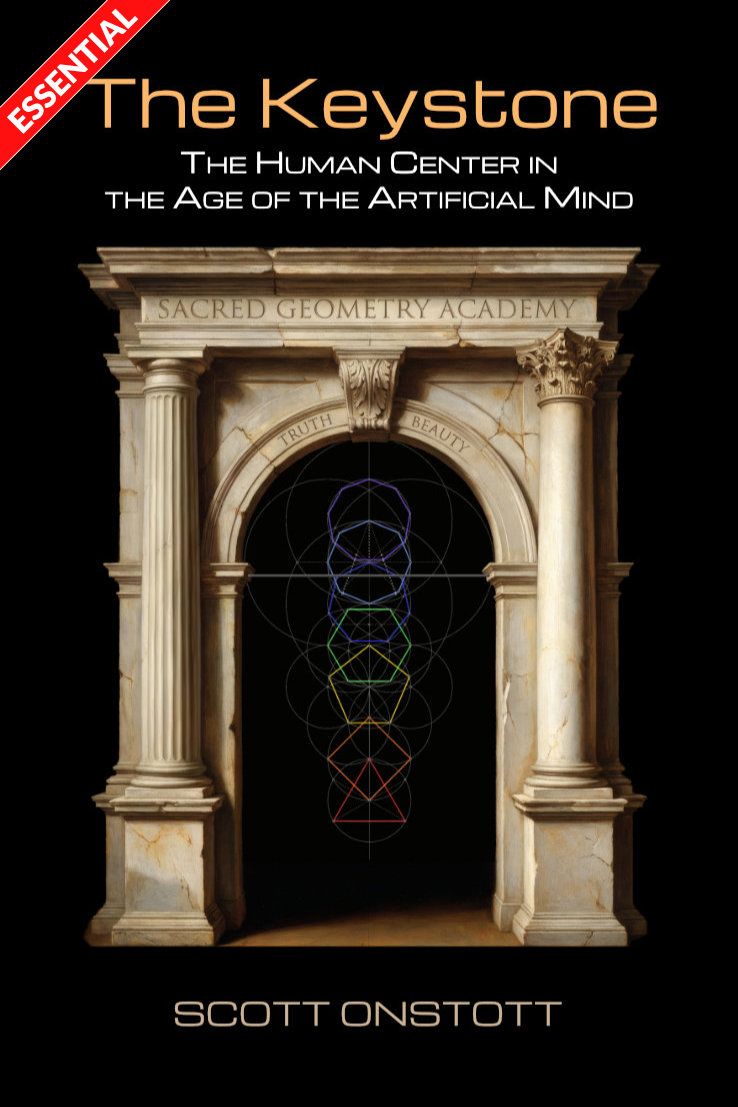
The instrument stands alongside the written works, and the
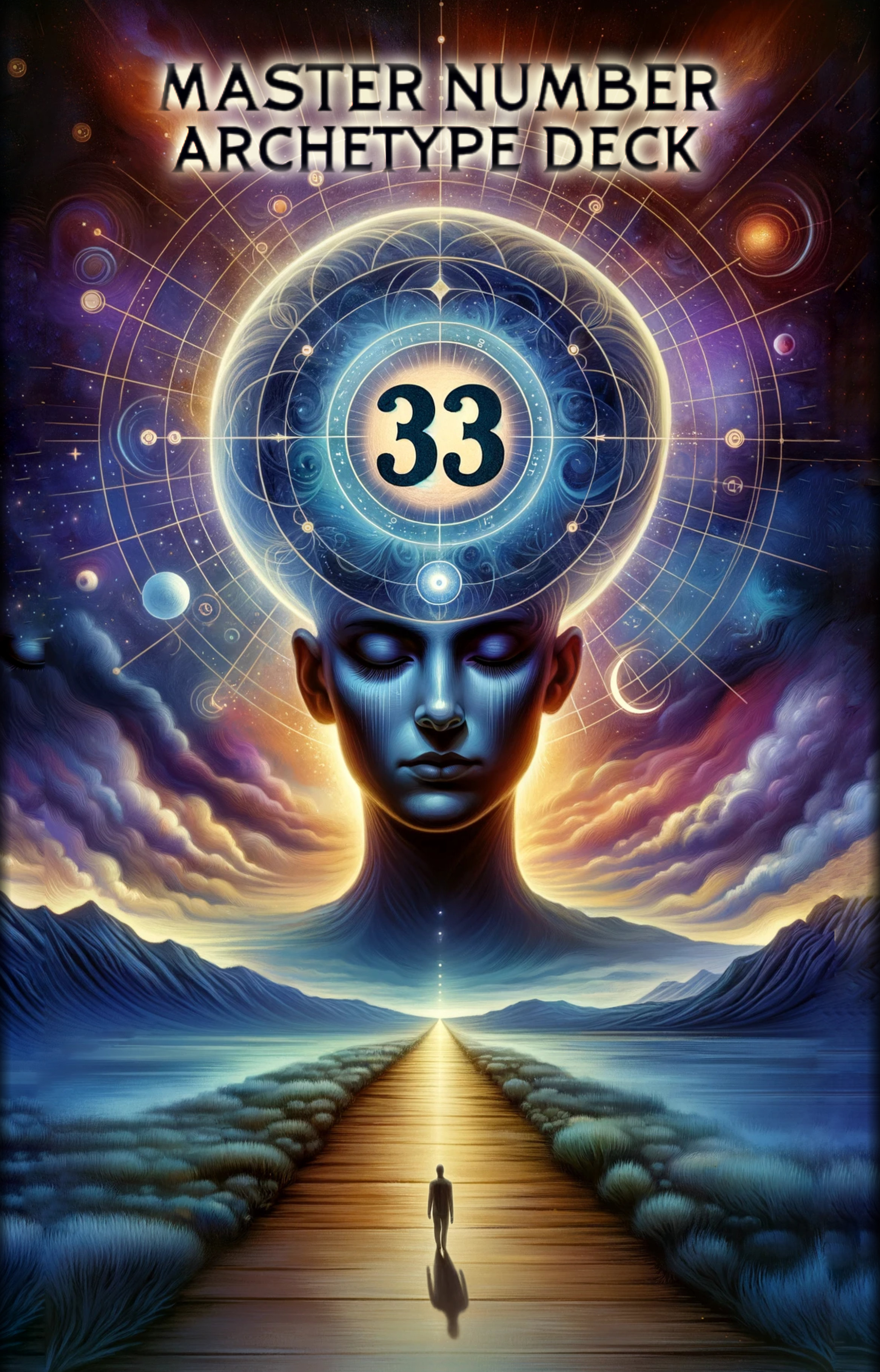
33 Archetype Deck, whose thirty-third card, the Self, is the still
point around which all thirty-two winds turn. Works by Scott Onstott are non-fiction.
Thirty-Two Winds is free to use and carries no advertising. Nothing is
tracked, nothing is sold. If a bearing proved useful, you may leave a
coin on the chart table. It keeps the domain renewed, the instrument
maintained, and the work moving.